
Understanding marine litter and plastic leakage impacts in packaging LCAs
Litter is the most visible consequence of mismanaged packaging waste, and until recently one of the hardest to put numbers on. As pressure on plastic waste mounts, packaging teams need to understand what happens when materials escape formal waste systems, and how the environmental risk differs across materials and disposal pathways.
A new microplastic impact method now makes this measurable. PIQET has put it into practice with two new indicators, so plastic leakage can sit alongside climate, resource, and water results rather than being left out of the picture.
Why plastic litter and leakage have been underrepresented in LCA
The United Nations Environment Programme estimates that 19 to 23 million tonnes of plastic waste leak into aquatic ecosystems each year (UNEP, 2021), causing long-term environmental, social, and economic harm. Yet until recently, these impacts were largely absent from life cycle assessment (LCA). There were three main reasons:
Very limited data on leakage rates. Once material is lost to the environment, it can never be measured accurately.
Insufficient data on environmental fate. Where does the material actually end up?
Unknown ecosystem impacts. Formal research measuring the effect of plastic on ecosystems was still in early development.
As a result, packaging LCAs focused on better-represented categories such as climate change, resource use, and water consumption, overlooking one of the most publicly visible consequences of mismanaged packaging waste on human health and the environment.
New methodologies: bringing marine impacts into scope
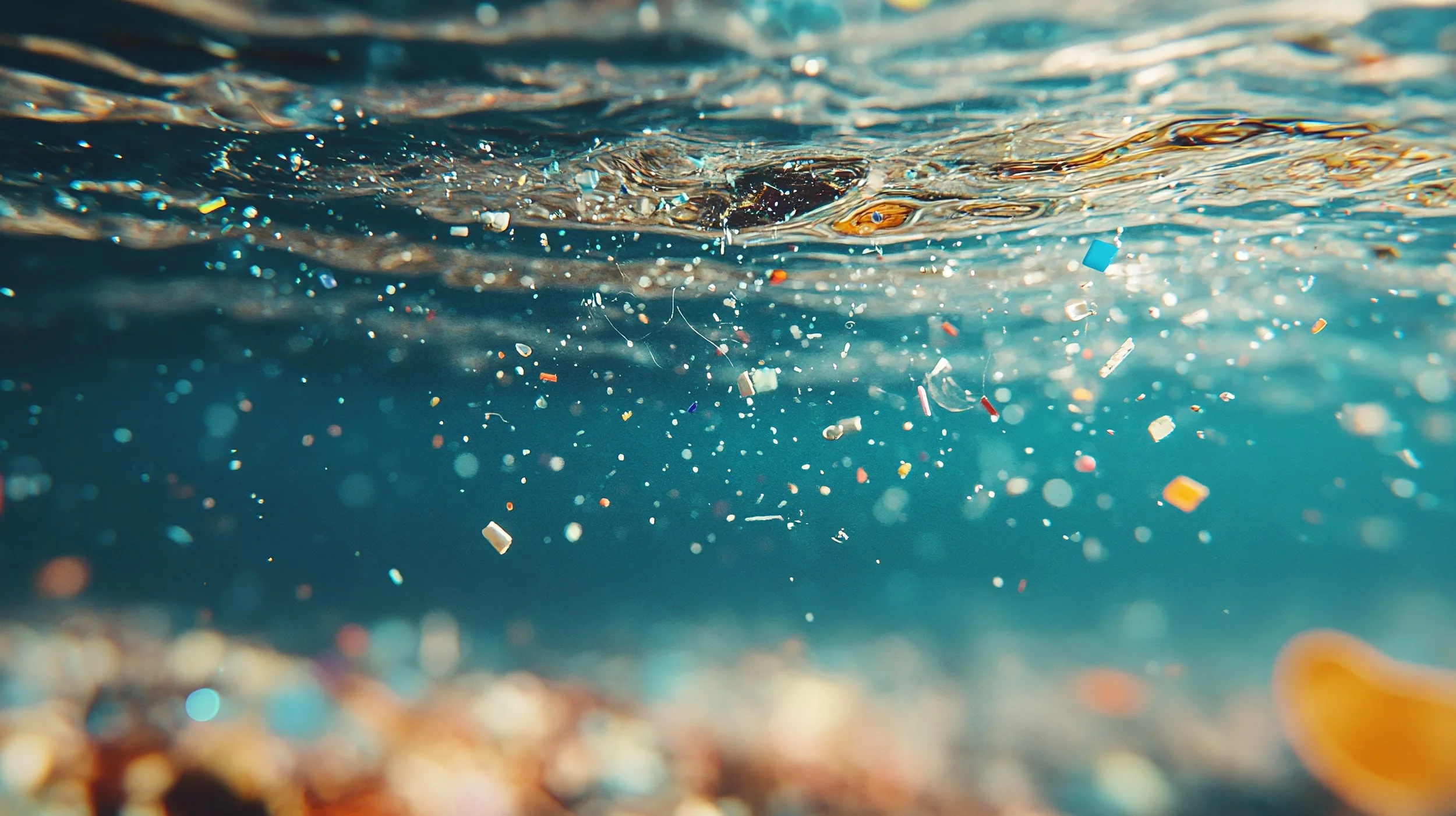
Recent advances by the Marine Impacts in Life Cycle Assessment (MarILCA) working group are closing this gap. In 2025, MarILCA introduced characterization factors to estimate the ecological impacts of plastic leakage into aquatic environments, measured as a Potentially Affected Fraction (PAF) of species, similar to ecotoxicity modeling. These factors differentiate impacts by polymer type, particle size, and shape, recognizing that plastics behave differently once released (Boulay et al., 2021). This allows plastic leakage to be integrated into LCA results alongside established categories such as climate change.
Terrestrial litter impacts, though less mature, can be explored using simplified degradation and fauna-interaction factors (Ballinger and Hann, 2016). These carry higher uncertainty and are best applied conservatively.
Key elements of the MarILCA framework
The characterization factor focuses on physical harm, not toxicity. Current factors quantify the physical impacts of microplastics on aquatic species, such as ingestion and entanglement, expressed as potential biodiversity loss (PAF). They do not yet include chemical toxicity or human health effects, which remain under investigation.
Fate matters as much as material choice. Impacts depend heavily on how plastics move and settle once released. Heavier or denser polymers such as PET, PVC, and PLA tend to sediment quickly, reducing exposure in the water column, while lighter materials such as EPS and polypropylene remain mobile longer, leading to higher and more variable impact factors (Corella-Puertas et al., 2023).
Polymer, size, and shape drive variability. Characterization factors vary significantly by particle size, shape, and polymer type. This introduces uncertainty, but also enables more realistic differentiation between packaging formats.
Microplastic impacts are material, but smaller, relative to climate impacts. Initial assessments indicate that marine microplastics contribute to ecosystem quality at a similar order of magnitude to other categories in this area, including climate change, ecotoxicity, eutrophication, land use, acidification, and water use. Including plastic litter in product LCAs is therefore no longer trivial.
Inventory assumptions remain the biggest challenge. The science is advancing faster than the data. Key uncertainties include estimating leakage fractions (often assumed at around 1 percent in the absence of better data), selecting appropriate elementary flows (polymer type and size fraction), and limited guidance for terrestrial-to-marine transfer pathways.
Best suited to screening and decision support. The microplastics indicator is most valuable for screening assessments and comparative decision-making. It supports informed design discussions and risk identification, but should not be used for precise or marketing claims.
The team at Lifecycles ran a webinar earlier this year talking through these elements in more detail. You can find the recording here.
Implications for packaging reporting and regulation
As policy frameworks evolve, expectations of LCA scope are expanding. In Australia, the Australian Packaging Covenant Organisation (APCO) increasingly emphasizes packaging outcomes beyond recyclability, including leakage risk and real-world performance. While marine litter indicators are not yet mandated, they can support more credible Packaging Sustainability Framework (PSF) reporting and stewardship decisions.
In Europe, the Packaging and Packaging Waste Regulation (PPWR) is driving stronger scrutiny of packaging design and environmental claims. As methodologies mature, plastic leakage and persistence indicators will likely play a growing role in substantiating claims and demonstrating compliance. In the United States, several extended producer responsibility (EPR) schemes are moving ahead: Oregon's eco-modulation requirements explicitly reference marine microplastic litter and plastic leakage alongside LCA calculations, signaling a shift toward comprehensive impact accounting.
Two new indicators in PIQET
PIQET has introduced two new indicators, Marine Microplastic and Plastic Leakage, for organizations wanting to understand and continually improve their performance. They are a way to improve conversations, not just calculations, helping teams understand trade-offs and system constraints, and identify where meaningful interventions can be made. Because this field is still evolving, the results should be communicated carefully.
| Indicator | Purpose | How it is calculated |
|---|---|---|
| Marine Microplastic | Captures ecosystem and organism harm from plastics entering aquatic systems | Uses characterization factors to translate plastic emissions into ecological effect metrics (species affected, habitat impact) based on plastic type, size, and fate pathways |
| Plastic Leakage | Quantifies plastic leaving the circular economy and entering the environment | Derived from a plastic flow analysis of mass flows across life cycle stages, reporting leakage rates by compartment (soil, river, ocean) |
Looking ahead
These indicators matter. Including them helps LCAs reflect real-world risks, align with emerging regulation, and drive better packaging decisions, provided their still-evolving results are communicated with care. Model marine microplastic and plastic leakage alongside your climate and resource results in your next PIQET assessment, and see the fuller picture behind your packaging choices.
Interested in finding out more? Schedule a demo via the link below.
References
Ballinger, A. and Hann, S. (2016) The potential for marine and terrestrial litter impacts to be included within life cycle assessment. Eunomia Research and Consulting.
Boulay, A.M., Lavoie, J., Boulay, C. and Bulle, C. (2021) A framework for the life cycle assessment of plastic leakage into the environment. International Journal of Life Cycle Assessment, 26(6), pp. 1186-1201.
Corella-Puertas, E., et al. (2023) MarILCA characterization factors for microplastic impacts in life cycle assessment: physical effects on biota from emissions to aquatic environments. Journal of Cleaner Production, 418, 138197.
James, K. and Grant, T. (2005) LCA of degradable plastic bags. Melbourne: Centre for Design at RMIT University.
Koelmans, A.A., et al. (2017) Risks of plastic debris: unravelling fact, opinion, perception, and belief. Environmental Science and Technology, 51(20), pp. 11513-11519.
United Nations Environment Programme (2021) From pollution to solution: a global assessment of marine litter and plastic pollution. Nairobi: UNEP.
Woods, J.S., Verones, F., Jolliet, O., Vazquez-Rowe, I. and Boulay, A.-M. (2021) A framework for the assessment of marine litter impacts in life cycle impact assessment. Ecological Indicators, 129, 107918.